Nowadays, TV schedules that used to follow the seasons are becoming a thing of the past. Now we can create our own viewing schedules without being tied to specific times. Whether it’s day or night, during a lunch break at work, or on the train home, we have the freedom to watch what we want, when we want. Maybe it’s an early way of adapting to climate change?
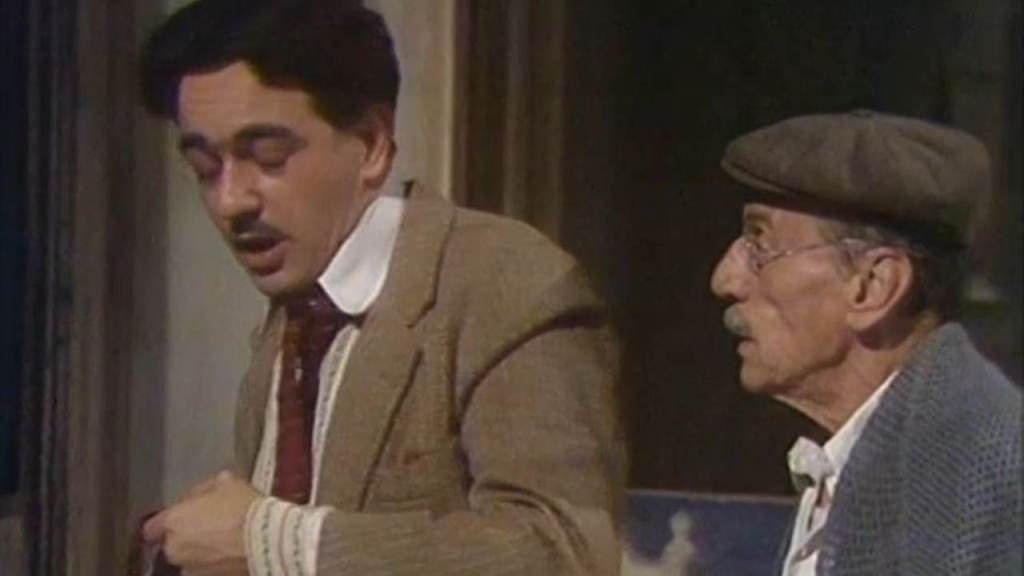
Anyway, to cut a long story short, last night while browsing online, I stumbled upon a clip from Eduardo De Filippo‘s play Natale in casa Cupiello. Driven by curiosity, I found the full play and started watching it yet again.
For those who might not know, it’s a lively depiction of Neapolitan family dynamics during the five days leading up to Christmas. This masterpiece by De Filippo brilliantly blends comedy, drama, and realism, painting a vivid picture of everyday life in 20th-century Naples, with a special focus on cultural traditions and human contradictions.
Maybe it was the heat these days or the fact that I’m preparing a pamphlet on heat transfer to be distributed in the fall, but I began to see the play as offering a surprising perspective on the second law of thermodynamics—a fundamental principle that explains entropy.
In thermodynamics, entropy is a measure of disorder or uncertainty in a system. It was Rudolf Clausius in 1865 who defined it as a physical quantity that quantifies the tendency of systems to evolve towards greater disorder over time. This fundamental principle of physics, though often enigmatic, finds a surprisingly clear representation in the tumultuous Cupiello family.
Luca Cupiello, the eccentric and traditionalist patriarch, perfectly embodies the human desire to create order and stability. His obsession with building the perfect Christmas nativity scene, driven by a quest for perfection and symbolic meaning, often leads to chaotic mishaps and comedic surprises. Despite his best intentions, his compulsive actions inevitably disrupt the family’s harmony.
Another key aspect of the play is the story of Ninuccia, Luca and Concetta’s daughter, who is trapped in an unhappy marriage with Nicolino. He may seem elegant and distinguished, but he’s actually rough and unkempt, far from fitting the social status he’s achieved. Ninuccia’s attraction to Vittorio, a younger and more charming man, introduces another layer of emotional entropy into the plot. Her conflicting emotions, the writing of a farewell letter to Nicolino, and her attempt to run away with Vittorio further destabilize the family, leading to explosive and unpredictable emotional conflicts.
Entropy also surfaces through the accidental revelations and misunderstandings that pepper the story. Luca’s discovery of Ninuccia’s letter, lost and found multiple times, fuels misunderstandings and intense emotional reactions among the characters. These unpredictable events and the consequent breakdown of family order highlight the inevitable nature of entropy, where even the best intentions can lead to unforeseen and undesired outcomes.
The dramatic climax of the play occurs in the third act, when Luca suffers a stroke due to accumulated emotional stress. This tragic event signifies the end of family order and a shift in the dynamics among the Cupiello family members. The tears and remorse of the remaining characters underscore the fragility of human relationships and the unpredictable nature of life itself.
So, what’s my point? My friends and colleagues in science might ask.
My point is that art has a unique ability to offer a deep and intuitive understanding of complex concepts, even without using the technical jargon of science. Through the depiction of human stories, conflicts, joys, and sorrows, art allows us to explore and comprehend profound themes like entropy.
This physical principle, which describes the tendency of systems to evolve towards greater disorder over time, resonates in artistic narratives that explore human nature and social dynamics. Art invites us to reflect on our existence, interpersonal relationships, and the forces that shape our world, offering an empathetic and emotional perspective that goes beyond mathematical formulas and scientific diagrams.
In this way, art not only entertains and inspires but also educates and enriches us, providing tools to interpret and engage with the abstract and complex concepts that define our daily reality.
So, do you like entropy, eh?*
*It’s a paraphrase of “Do you like the nativity scene, eh?”— a line Luca Cupiello repeatedly says to his younger son throughout the play to emphasize his connection to order. At first, the son always replies “no,” but by the end, as he stands by his sick father, he finally answers “yes.”

 100 Watt il blog di Antonio Disi